
Introduction
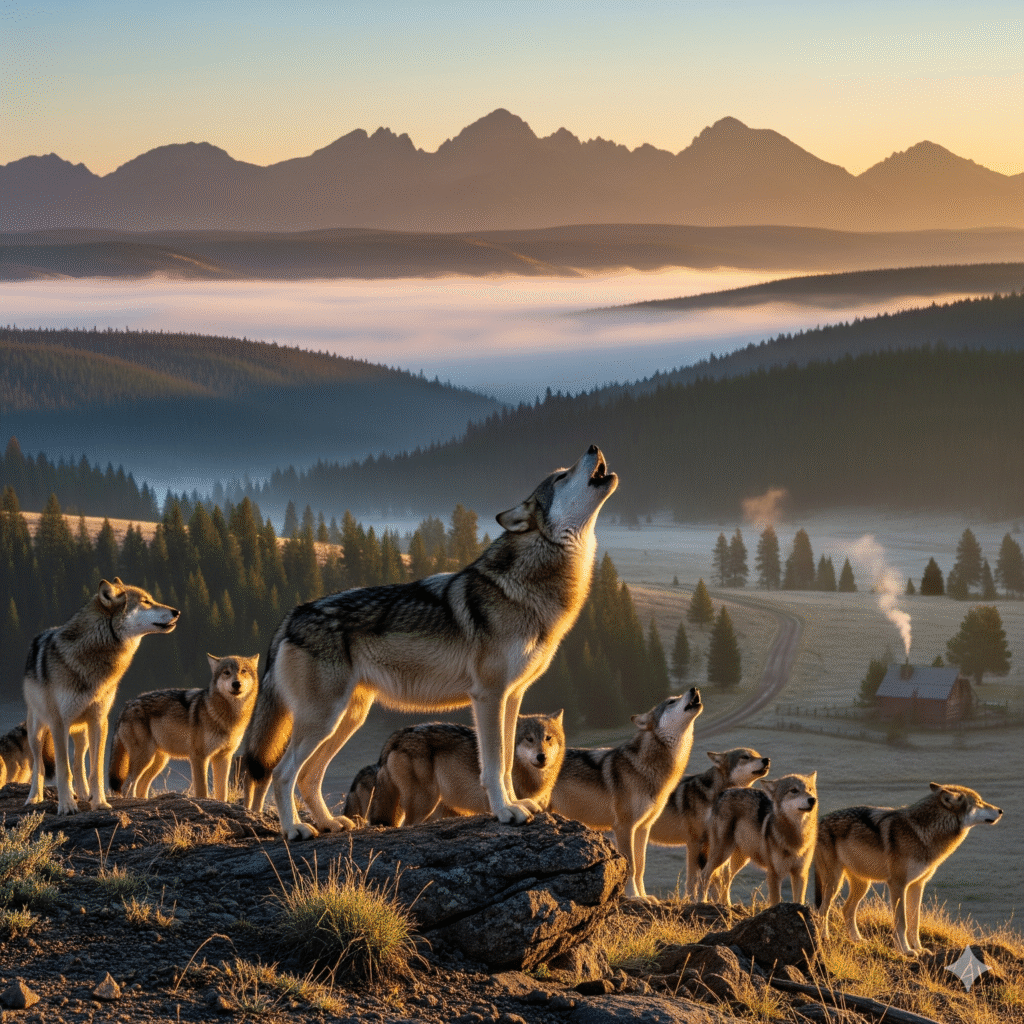
If you’ve ever stood at the edge of Yellowstone at dawn, you know the silence is never really silent. Somewhere in the distance, a wolf pack might let out a long, mournful howl that carries across the valley. For many visitors, hearing that sound feels like stepping into another world. Wolves, after all, aren’t just another animal here — they’re symbols of wilderness, resilience, and balance.
But today, these wolves are facing a new and troubling threat. And unlike the harsh winters or rival packs they’ve survived for centuries, this one is human-made. Understanding what’s at stake — and why it matters — can help us decide what kind of relationship we want with America’s wildest spaces.
The Problem: Wolves Caught Between Park Borders and Policy Lines
Here’s something many first-time Yellowstone visitors don’t realize: wolves don’t recognize human boundaries. A wolf pack roaming Lamar Valley might cross into Montana in a single night. And once they do, they’re no longer protected.
Since their reintroduction in 1995, Yellowstone wolves have been both celebrated and controversial. Biologists documented how they reshaped ecosystems, keeping elk herds in check and even helping vegetation and rivers recover — a process often called a “trophic cascade.” But beyond the park’s invisible lines, political battles have simmered. Ranchers worry about livestock losses. Hunters argue wolves compete with elk hunting opportunities.
The real shift came after 2021, when Montana and Idaho passed laws expanding wolf hunting. Montana even allowed night hunting and higher kill quotas. According to the National Park Service, at least 25 Yellowstone wolves were killed in just one season once they stepped outside park boundaries — one of the largest losses since reintroduction.
When I first read those numbers, I thought back to a snowy morning in Yellowstone when I spotted the Junction Butte Pack through a ranger’s scope. Dozens of tourists stood in silence, huddled in their coats, tears in some eyes. To imagine that same pack diminished by political decisions beyond the park is heartbreaking.
How This Threat Unfolds: From Policy to Pack Survival
So how do hunting policies translate into actual harm for Yellowstone’s wolves? Let’s break it down:
- Pack Disruption – Wolves are deeply social. Take out a single alpha female or a lead hunter, and you risk destabilizing the entire pack. It’s not just one wolf lost — it’s a ripple effect.
- Population Decline – Numbers tell the story. Yellowstone wolf populations hover around 100. Losing 20–25 in a single season outside the park isn’t sustainable.
- Tourism Impact – Wolves aren’t just an ecological story; they’re an economic one. A 2019 study found wildlife watching brings $80 million annually to the region, much of it from visitors hoping to glimpse wolves. When packs thin out, those sightings — and the local revenue — decline.
- Scientific Setbacks – Wolves in Yellowstone are among the most studied wild animals in the world. Each loss means years of behavioral research can vanish overnight.
It’s a cascade effect, but not the kind biologists hoped for.
Comparison: Then and Now in Wolf Conservation
It’s worth pausing to see how far we’ve come — and what’s at risk of being undone.
- 1995 Reintroduction: 14 wolves brought from Canada into Yellowstone and central Idaho. Ecologists called it “the most successful reintroduction project in U.S. history.”
- 2000s Growth: Populations thrived, with packs spreading across the Greater Yellowstone Ecosystem. Scientific research flourished, and wolf watching became iconic.
- 2011 Delisting: Wolves removed from the Endangered Species Act in Montana and Idaho, later in Wyoming. Management shifted to states.
- 2021–Present: Aggressive hunting laws passed. Populations outside parks dropped sharply, and Yellowstone packs lost significant numbers once they crossed invisible state lines.
In short, what began as a conservation success story risks becoming a cautionary tale. It’s like restoring a priceless painting and then letting rainwater leak across the canvas.
Why It Matters: Beyond Wolves to the Wider Ecosystem
Here’s the bigger picture: wolves aren’t just charismatic animals. They’re keystone predators, shaping entire ecosystems. When wolf numbers drop unnaturally, elk populations swell. Overgrazed valleys mean fewer songbirds, degraded streams, and less biodiversity.
And there’s a human angle too. Wolves embody the idea that wildness still exists in America. Losing them — or watching their survival reduced to political tug-of-war — chips away at that vision.
Personally, when I think of wolves, I think of standing with my young niece in Lamar Valley. She clutched a little pair of binoculars, scanning the horizon. When the wolves appeared, her face lit up with awe. That’s the kind of memory that stays for life. Shouldn’t future generations have that chance too?
Expert Insights
Dr. Douglas Smith, who led Yellowstone’s wolf reintroduction project, once said: “Wolves are not just about wolves. They’re about an entire ecosystem, about how humans choose to coexist with the wild.”
Conservation groups like Defenders of Wildlife warn that current state hunting policies are eroding decades of progress. Their reports stress the need for science-driven management, not politically motivated quotas.
FAQs
1. Why are wolves important to Yellowstone?
Wolves keep elk herds balanced, which allows plants, trees, and streams to recover. This, in turn, supports beavers, birds, and countless other species. They’re key players in maintaining a healthy ecosystem.
2. Can you see wolves in Yellowstone today?
Yes! Lamar Valley and Hayden Valley are prime viewing spots. Bring patience, binoculars, and warm layers. The best times are dawn and dusk, when wolves are most active.
3. Do wolves threaten livestock near Yellowstone?
Occasionally, yes. Ranchers report some losses, but state compensation programs help offset damages. Studies show wolf-related losses are relatively low compared to other factors like weather or disease.
4. Are Yellowstone wolves endangered?
Not currently. Wolves were delisted from federal protection in most states, but conservationists argue their populations remain fragile, especially with recent hunting pressures.
5. How can the public help protect wolves?
Supporting science-based policies, visiting responsibly, donating to conservation groups, and contacting lawmakers are all ways individuals can make a difference.
Conclusion
The new threat to wolves in and around Yellowstone isn’t about nature taking its course — it’s about human choices. Decisions made in statehouses and hunting commissions are reshaping the fate of packs that symbolize America’s wild heart.
If we want future generations to stand in Lamar Valley, hear that haunting howl, and feel the same goosebumps we do, then we can’t treat wolves as expendable. They are storytellers of resilience, teachers of balance, and threads in a tapestry far bigger than themselves.
The question is: will we honor that? Or let politics silence the howl of Yellowstone’s wolves?