
Introduction
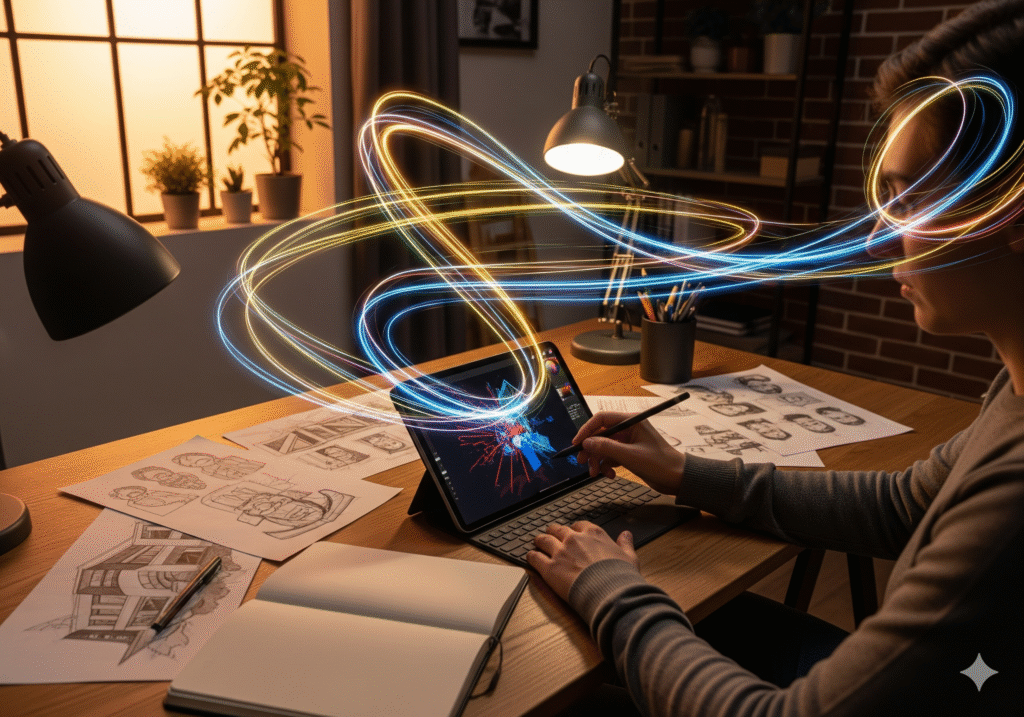
Have you ever stared at a blank page, frustrated because the ideas just won’t come? I know I have. But then, out of nowhere, a tool – a tablet, an app, or even a simple stylus – suddenly turns frustration into inspiration. That’s the magic behind how a gadget drives human creativity. These little devices aren’t just convenient; they’re catalysts, sparking imagination and helping ideas flow when you least expect it.
In today’s fast-paced world, creativity isn’t optional – it’s essential. Entrepreneurs sketch prototypes, writers draft stories, musicians experiment with new sounds, and students tackle complex projects. The right gadgets don’t replace your talent – they unlock it. In this article, we’ll explore the science behind creative gadgets, real-life examples, and practical ways to use them to their fullest potential.
The Problem: Why Creativity Hits a Wall
Even the most innovative minds hit roadblocks. Writer’s block, design fatigue, or even just too many distractions can stall creativity. Why does it happen?
- Mental Clutter: With endless notifications and to-do lists, your brain struggles to focus on fresh ideas.
- Limited Tools: Sometimes traditional notebooks or basic apps just aren’t enough to support experimentation.
- Fear of Failure: Without flexible platforms, creators hesitate to take risks.
- Incomplete Information: Not having the right references or visual aids can make brainstorming painfully slow.
For instance, I remember trying to draft a storyboard for a short film. My sketches looked stiff, uninspired. Then I picked up a digital storyboard tablet. Dragging and rearranging scenes freely without worrying about wasting paper unlocked ideas I hadn’t imagined. That moment made me realize: the right gadget can be the difference between a dead-end and a breakthrough.
How-To: Use Gadgets to Amplify Your Creativity
It’s not about buying every shiny new device – it’s about using the right ones strategically:
- Match Tools to Your Process: Writers may prefer AI-assisted brainstorming apps like Scrivener, while designers thrive on graphic tablets. Choose gadgets that complement your workflow.
- Embrace Experimentation: Devices that let you undo, layer, and iterate without fear encourage bold ideas. Digital sketchpads, music sequencers, or design software are perfect examples.
- Engage Multiple Senses: Tablets, styluses, or audio-visual apps stimulate more parts of your brain, enhancing problem-solving and imagination.
- Collaborate Seamlessly: Cloud-connected gadgets allow real-time feedback. Sharing sketches, drafts, or prototypes accelerates teamwork and sparks collective creativity.
- Review and Reflect: Gadgets that log your work let you revisit ideas later. I often scroll through old digital sketches and notice patterns I wouldn’t have seen on paper.
Even simple habits – like reviewing your work digitally instead of flipping through scattered notebooks – can significantly boost idea generation.
Comparison: Gadgets vs. Traditional Tools
| Aspect | Gadgets | Traditional Tools | Why It Matters |
| Speed | Real-time edits and iteration | Manual adjustments | Faster experimentation |
| Flexibility | Layers, undo, AI suggestions | Fixed medium | Encourages creative risk-taking |
| Collaboration | Cloud sharing, live edits | Physical handoff | Enables teamwork across distances |
| Feedback | Analytics, AI guidance | Peer review only | Immediate insights |
| Portability | Multi-platform access | Stationary | Create anywhere, anytime |
While traditional tools offer tactile charm, gadgets offer speed, adaptability, and feedback that dramatically enhance the creative process. Think of them as co-creators rather than replacements.
Benefits and Real-Life Use Cases
The impact of gadgets on creativity spans industries:
- Art & Design: Wacom tablets or iPad Pros let artists layer, erase, and experiment with minimal friction. Apple Pencil users often report faster ideation and more experimental artwork.
- Writing & Storytelling: AI-powered assistants help draft plots, suggest vocabulary, and structure narratives, breaking through writer’s block.
- Music Production: MIDI controllers and modular synths let musicians explore soundscapes previously impossible to produce manually.
- Education: Interactive learning devices engage multiple senses, improving creative problem-solving for students.
- Prototyping & Entrepreneurship: 3D printing gadgets turn abstract concepts into tangible prototypes, accelerating innovation.
I attended a design hackathon recently where teams with digital tablets produced twice as many functional prototypes in one day compared to teams relying solely on sketches and cardboard. The gadgets didn’t do the thinking – they amplified human ingenuity.
Expert Insights
Dr. Sofia Ramirez, a cognitive scientist, emphasizes:
“Gadgets act as external cognitive scaffolds. By reducing the effort of creating and organizing, they free up mental resources for imaginative thinking. The brain isn’t working harder – it’s working smarter.”
Supporting this, research from MIT Media Lab shows participants using interactive visualization tools scored significantly higher on ideation tasks compared to those using traditional methods.
FAQs
Q: Can gadgets make someone more creative?
Yes. They provide tools, structure, and stimuli that accelerate idea generation. But they enhance – not replace – original thought.
Q: Which gadgets are most effective?
Devices that allow iteration, multi-sensory feedback, and collaboration – like tablets, digital whiteboards, and AI assistants – tend to boost creativity the most.
Q: Can gadgets make creativity too mechanical?
Not if used thoughtfully. They should support imagination, not dictate it. Intentional use preserves originality.
Q: Do gadgets help group creativity?
Absolutely. Cloud-based and interactive devices allow teams to brainstorm and iterate in real time, fostering synergy and innovation.
Q: Are expensive gadgets necessary?
Not at all. Many affordable tools – styluses, note-taking apps, or AI assistants – can significantly enhance creative workflows. Utility matters more than price.
Conclusion
Gadgets don’t replace genius – they amplify it. Whether you’re sketching, writing, composing, or prototyping, the right device removes friction, sparks ideas, and elevates your creative output.
By embracing gadgets thoughtfully, you can explore, experiment, and innovate more freely. Next time you pick up your tablet, stylus, or AI tool, remember: it’s not just a gadget – it’s a co-creator, ready to unlock your imagination.