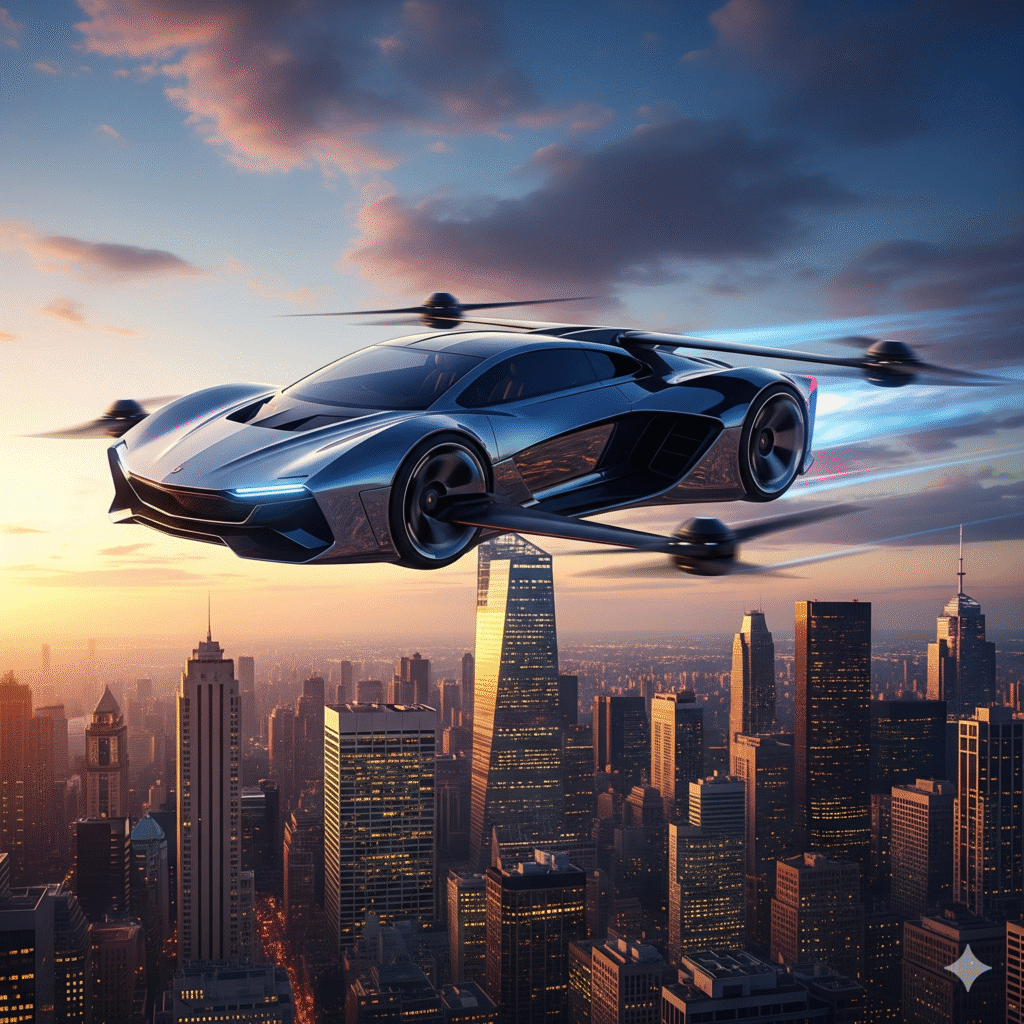

Imagine gliding silently over rush-hour traffic, city lights twinkling below, while honking horns fade into the distance. For decades, flying cars were the stuff of comic books and sci-fi movies-but now, Silicon Valley is bringing them closer to reality. From sleek prototypes to ambitious urban air mobility plans, the race is on to turn this airborne dream into everyday life.
Flying cars aren’t just about speed-they’re about redefining transportation, reducing congestion, and pushing the limits of technology. In this guide, we’ll explore why these futuristic vehicles are closer than ever, what challenges remain, and how you might one day commute above the city streets.
The Problem: Traffic, Congestion, and Our Aerial Aspirations
Let’s face it: traffic is getting worse. According to INRIX Global Traffic Scorecard, Americans spent an average of 99 hours stuck in traffic in 2022. That’s over four full days lost per year just idling in cars.
Flying cars offer a tantalizing solution: bypass crowded streets entirely. But the reality is far more complex. Engineers must tackle safety, noise, battery life, and air traffic control challenges before we all have jetpacks on wheels. And yet, Silicon Valley innovators are leaning into the challenge with unprecedented speed and resources.
How It Works: From Prototype to Sky
I remember stepping into a Joby Aviation prototype last year-an intimate cockpit, smooth glass panels, and rotors that whispered rather than roared. The vehicle lifted vertically, hovered for a moment, then glided forward with remarkable stability.
Flying cars rely heavily on eVTOL technology, allowing vertical takeoff like a drone but forward flight like a plane. They often integrate autonomous systems, including redundant sensors, collision avoidance, and precise navigation to ensure safety in urban skies. Battery efficiency remains a hurdle, but improvements in lightweight materials and high-density batteries promise flight times up to 150 miles on a single charge.
Urban air mobility (UAM) networks are being planned with the FAA’s guidance to ensure these vehicles integrate seamlessly into existing air traffic systems. It’s a blend of aerospace engineering and smart city infrastructure, and the possibilities are staggering.
Comparison: Traditional Cars vs. Flying Cars
How do flying cars stack up against our familiar sedans and SUVs? Consider commute time: a 30-mile drive in Los Angeles can take over an hour. A flying car could reduce that to 15 minutes. But there are trade-offs:
| Feature | Traditional Car | Flying Car (eVTOL) |
| Speed | 30–60 mph | 120–200 mph |
| Flexibility | Full road access | Requires takeoff/landing zones |
| Safety | High familiarity, predictable | New tech, regulated |
| Environmental Impact | Gasoline or EV | EV with minimal emissions, noise reduction |
Flying cars aren’t about replacing cars entirely-they’re about enhancing mobility, particularly in congested urban centers where time is a premium.
Benefits and Use Cases: Beyond the Commute
Flying cars could revolutionize more than just daily commutes. Imagine:
- Emergency Services: Rapid transport of medical supplies, organs, or personnel during crises.
- Tourism: Aerial sightseeing experiences over landmarks and natural wonders.
- Logistics: Quick delivery of high-value goods, bypassing road congestion entirely.
As a personal anecdote, during a demonstration flight, I witnessed how smoothly a prototype navigated between skyscrapers. The pilot, speaking through a headset, mentioned that autonomous navigation allows for tight corridors without compromising safety. It felt like watching the future unfold in real-time-a thrilling mix of trust and innovation.
Expert Insight
Dr. Paul Stein, Professor of Aerospace Engineering at Stanford, emphasizes:
“We’re not just building flying cars-we’re building an ecosystem. Batteries, sensors, regulations, and urban planning must all evolve together. The technology is ready; society needs to catch up.”
His words highlight a central truth: technology is just one piece of the puzzle. Regulation, public acceptance, and infrastructure will determine whether these vehicles truly soar.
FAQs
1. Are flying cars safe?
Flying cars incorporate multiple redundancies: autonomous sensors, collision avoidance, and emergency landing systems. While the technology is new, rigorous testing and FAA certification aim to ensure safety standards meet or exceed conventional aviation.
2. How far can a flying car travel on a single charge?
Current eVTOL prototypes achieve ranges between 60–150 miles per charge, depending on payload and battery technology. Continuous improvements in battery density promise longer distances in the near future.
3. When will flying cars be available commercially?
Some companies, like Joby Aviation, plan limited commercial operations by 2025, primarily in urban air mobility networks. Widespread adoption will depend on infrastructure and regulatory approvals.
4. How much will flying cars cost?
Early prototypes are expensive, likely costing hundreds of thousands of dollars per vehicle. Prices are expected to drop as production scales and technology matures.
5. Will flying cars reduce traffic congestion?
Yes, but primarily for shorter, high-demand urban routes. They supplement existing transportation, offering faster commutes for those who can access vertiports efficiently.
Conclusion
Flying cars are no longer the stuff of dreams. Silicon Valley’s bold innovations, combined with eVTOL technology and urban air mobility planning, bring the future closer every day. While hurdles remain-from battery limitations to airspace regulation-the promise of gliding silently above congested streets is increasingly tangible.
If you’ve ever imagined your commute soaring over the city, the next decade may just make that fantasy a reality. Keep an eye on companies like Joby Aviation, Archer, and Lilium-they’re not only building flying cars; they’re reshaping the way we think about transportation. The sky, it seems, is no longer the limit.