
Introduction
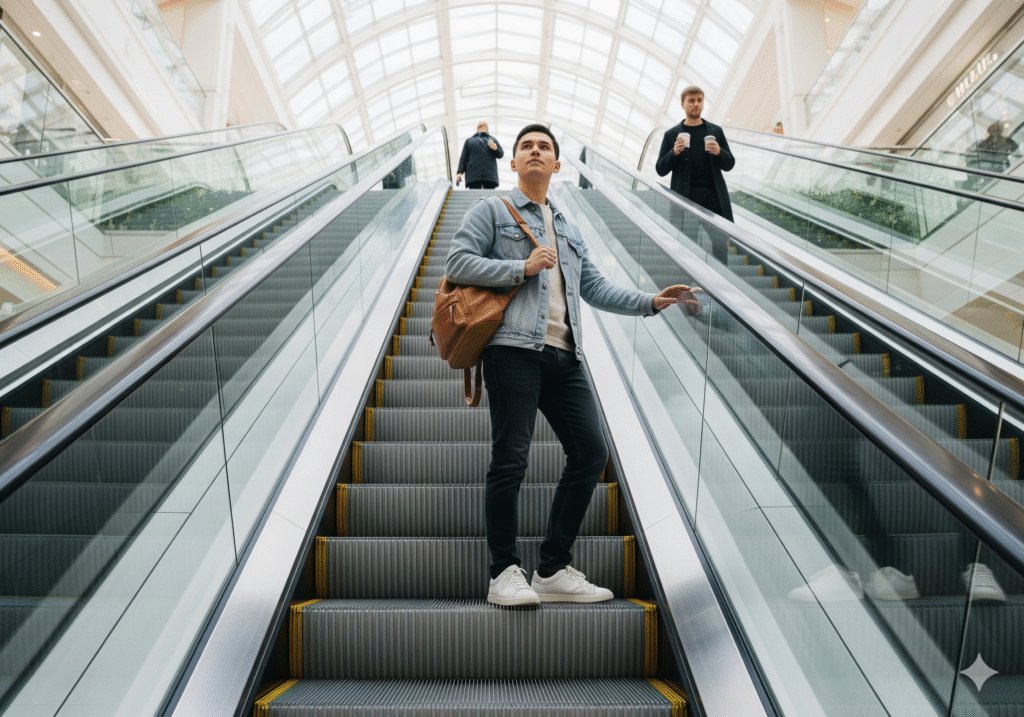
Picture this: you’re juggling a latte in one hand, shopping bags digging into your wrist, maybe your phone buzzing in your pocket. The escalator’s right ahead. What’s your instinct? Just walk-I’ll save a few seconds.
I’ve thought the same. Most of us have. But here’s the kicker: that “shortcut” is actually one of the most common causes of escalator accidents. The U.S. Consumer Product Safety Commission says more than 10,000 people are hurt on escalators in the U.S. every single year. And the majority of these mishaps? Completely avoidable if we just stood still, held the handrail, and faced forward.
This isn’t just about rules-it’s about peace of mind. In the next few minutes, I’ll walk you through why standing is smarter, how it affects everyone around you, and what experts (and real-life mishaps) can teach us about this simple habit.
Quick Takeaway
Walking on escalators feels like a time-saver, but it comes with higher risks-slips, bumps, and falls. Safety experts recommend standing still, holding the handrail, and facing forward. Surprisingly, this not only prevents thousands of injuries every year but also keeps crowd movement smoother.
The Problem: Why Walking on Escalators Is Risky
Escalators weren’t built as moving staircases for racing up and down-they’re designed for safe, steady transport. The moment someone starts walking, the rhythm shifts and things can get messy.
- Slips and trips: Ever stepped on a wet escalator step or had a shoelace catch? It happens fast.
- Collisions: In crowded areas, walking often means bumping into someone else.
- Handrail neglect: If your hands are busy-coffee, phone, luggage-you’re not braced if the escalator jolts.
I’ll never forget one incident at a mall. A man hurried up behind someone standing still. They collided, coffee went flying, and suddenly a dozen people were thrown off balance. A simple decision to stand could’ve prevented the chaos.
Dr. Linda Morgan, a human factors engineer, summed it up perfectly:
“Even small missteps on escalators can escalate quickly. Standing, facing forward, and holding the handrail drastically reduces the risk of injury while maintaining smooth traffic flow.”
How-To: Best Practices for Escalator Safety
Riding safely doesn’t require special training-it just takes a few mindful steps:
- Step On, Stand Centered: Place your feet firmly in the middle of the step.
- Hold the Handrail: Even a tiny jolt feels manageable with a steady grip.
- Face Forward: Anticipating the stop at the top avoids stumbles.
- Check Loose Clothing: Long scarves, straps, or jackets can get caught.
- Assist Children and Seniors: Give them your hand or guide them to the center.
Airports that encouraged this behaviour reported fewer accidents and less congestion. It turns out, standing still is faster for everyone.
Standing vs. Walking in Crowded Escalators
Here’s a question: does walking actually save you time? You might be surprised. Studies show that in busy places, walking slows the whole flow.
- When everyone stands, traffic moves at a steady pace.
- When people walk, it creates uneven movement, forcing others to shuffle aside.
Think of it like traffic on a highway. Ever noticed how one car weaving through lanes slows everyone else down? That’s exactly what happens on escalators.
A study in the Journal of Safety Research confirmed this: escalators move more efficiently when passengers just stand still.
Why Standing Is the Smarter Choice
Standing offers more than just safety-it’s actually a sanity-saver.
- Fewer injuries: No sudden falls or painful collisions.
- Smoother flow: Everyone gets where they’re going without interruption.
- Less stress: No rushing, no weaving through strangers.
- Better awareness: Standing lets you spot obstacles or react to sudden stops.
Personally, I find standing on escalators a tiny break in the day. No rush, no balancing act-just a moment to breathe.
Expert Insights
Dr. Morgan makes an interesting point:
“Standing still and using the handrail isn’t just about safety-it improves overall crowd movement. People underestimate how minor collisions can ripple out into backups and injuries.”
Transit agencies have noticed the same. Cities that ran public safety campaigns encouraging people to stand still saw fewer escalator accidents almost immediately.
FAQs
Q1: Isn’t walking faster if I’m running late?
In theory, yes. In practice, not so much-especially in crowds. Standing keeps everyone moving at the same rhythm, often making the ride quicker overall.
Q2: How common are escalator injuries?
Over 10,000 happen every year in the U.S. alone. Most are slips, trips, or items getting caught. Holding the handrail cuts the risk significantly.
Q3: What should I do with kids?
Hold their hand, keep them centered, and remind them to stay still. Escalators can be scary for children, so guidance matters.
Q4: What shoes are safest?
Closed, flat shoes with grip are ideal. High heels, flip-flops, or smooth soles are accidents waiting to happen.
Q5: Do “stand-only” campaigns really help?
Yes. Airports and subway systems that promote standing-only escalators report fewer injuries and smoother rides.
Q6: What if the escalator suddenly stops?
It’s rare, but standing makes it easier to handle. With a firm grip, you’re steady even in a sudden stop.
Conclusion
Next time you step onto an escalator, take a moment. Is rushing ahead worth the risk? Probably not. Standing still, holding the rail, and facing forward may feel slower, but it’s safer, more efficient, and far less stressful.
So whether you’re in a packed subway station or a buzzing mall, remember: don’t walk-just step on, hold on, and let the escalator carry you. Sometimes the smartest move is simply standing still.