
(Why this shortcut could cost more than you think)
Introduction
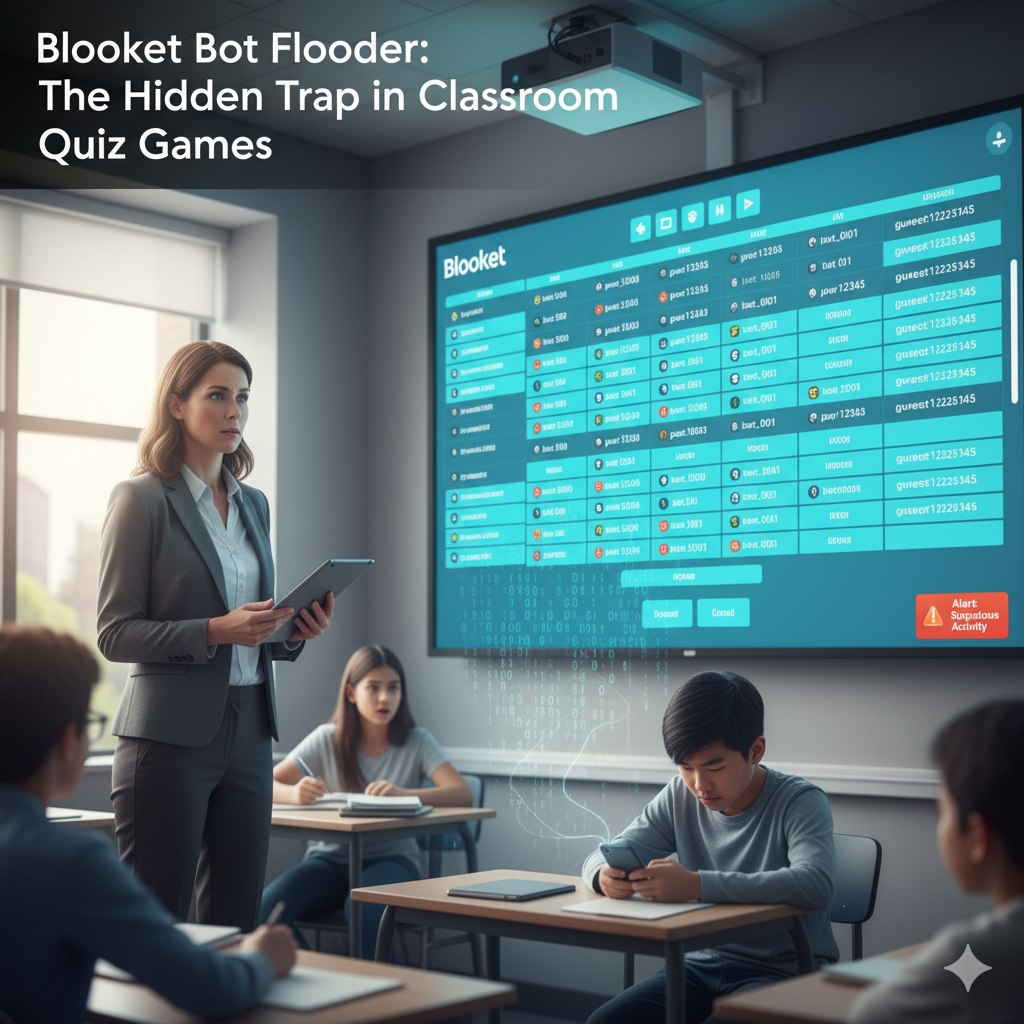
If you’ve ever logged into a live game on Blooket and watched dozens of players join in a blink—only to realize many of them are bots—you’re not alone. That’s exactly what a “Blooket bot flooder” does: it injects fake players into the game, turning an engaging quiz into a chaotic mess. It matters because what starts as a fun review activity can quickly become unfair, ineffective, and even risky. As someone who’s helped teachers troubleshoot game disruptions and talked to students about integrity in gamified learning, I’ll walk you through what this flooder really is, why it’s trending, and what you (whether you’re a student or educator) should do instead.
The Problem & Context
Why does the Blooket bot flooder issue exist?
It starts with the transformation of Blooket from a harmless classroom game to a competitive platform loaded with prizes and bragging rights. Students eager to win (or prank) find shortcuts—and that’s where bots come in.
From the teacher’s side:
- Bots inflate participant numbers, wreck the data you’re trying to gather, and waste class time. (Blockchain Council)
- Educators report a growing frustration: games that should help engagement instead turn into a “bot warzone”. (Reddit)
- Ethically, using bots diminishes the whole point of an educational game. As one review puts it: “This game teaches children that the way to the top is cheating and stealing.” (Common Sense)
From the student side:
- Bots are often seen as “fun” or “harmless pranks”.
- But the consequences can be serious: account bans, loss of progress, and even disciplinary action in school. (News Blaster)
- The bigger picture: these tools steal the chance to actually learn instead of just “win”. (indonewyork.com)
In short: The flooder undermines everything Blooket tries to stand for—engagement, fairness, and learning.
How‑To & Steps (When You’re the Teacher or Host)
If you’re running a Blooket game and want to protect your session (or if you’re a student who wants to play rightly), here’s what you can do:
- Keep your game code private
Avoid posting it publicly (like social media or open forums). If bots don’t have access, they can’t join. (OutRight Store) - Use “manual start” mode or disable late joiners
Start the game only when real students have joined so you don’t accidentally let bots flood in last minute. - Monitor the lobby for odd usernames and patterns
If dozens of users join at once, with random names or no responses—chances are bots. Kick them manually if needed. (Blockchain Council) - Limit the number of participants
A smaller, controlled group reduces the chance of flood bots taking over. - Educate your students about integrity and cheating risks
Explain why bots hurt everyone’s experience—including their own learning. This builds a culture of fairness rather than just relying on tech fixes. (indonewyork.com) - Report suspicious behavior to Blooket support
If you detect flooding or automated play, reporting helps the platform improve its bot‑detection. (Blockchain Council)
Following these steps can transform a chaotic game into a meaningful one—where students play and learn, not just win or disrupt.
Comparison & Alternatives
Let’s compare three approaches: using a flooder vs playing legitimately vs enhancing game integrity.
| Approach | What happens | Long‑Term impact |
| Use a bot flooder | Many fake players, unfair advantage, short‑term win | Account bans, loss of trust, missed learning |
| Play legitimately | Real competition, genuine achievement | Builds skill, credibility, and real progress |
| Host with safeguards | Controlled game, fair play, protected sessions | Better engagement, reliable data, positive class culture |
There are also safer alternatives if what you’re after is simply “better game performance” rather than cheating:
- Practice modes and custom game sets that let students learn without pressure. (techsauryacom1.odoo.com)
- Team‑based game modes where the focus is on collaboration instead of individual competition.
- Review sessions that emphasize accuracy and speed developed through study—rather than shortcuts.
In other words: you don’t need a flooder to “win”—you just need the right environment and mindset.
Benefits & Use Cases of Playing Fair
When you avoid bots and play by the rules, what do you gain?
For students
- Real learning: You engage with questions, retain knowledge, improve accuracy.
- Authentic pride: The win you earn is yours, based on your effort.
- No fear of consequences: No bans, no lost accounts, no guilt.
For educators
- Reliable data: Grades and participation reflect authentic student performance.
- Smooth game flow: No disruptions from flooding bots means class time is used productively.
- Safe learning environment: Gaming doesn’t turn into a hacking lesson.
For classrooms
- Fair competition: Everyone plays on a level field, which increases engagement.
- Positive culture: Integrity becomes part of the game.
- Sustainable use of the tool: Blooket remains valuable rather than being abandoned due to misuse.
One teacher shared how a bot‑flooded session led them to stop using Blooket entirely—so the benefits of playing fair are also about preserving the tool for future use.
Expert Insight
“Using automated bots in educational game platforms like Blooket not only disrupts the learning process, it undermines trust between students and educators. The most effective games are those where participation is real, reflective and aligned with the platform’s learning goals.” — Dr. Tara Middleton, Educational Technology Specialist
FAQs
Q: Can I ever use a “bot” legitimately in Blooket?
A: Generally no. The platform’s Terms of Service prohibit automated players that aren’t real participants, and using such tools can lead to account suspension or bans. (News Blaster)
Q: What are the chances of getting caught using a bot flooder?
A: High. Patterns like instant joins, identical names, or no participation flag the system or teacher’s radar. Many users report temp bans once detected. (Reddit)
Q: If I don’t flood, how else can I succeed in Blooket?
A: Focus on studying the quiz content, playing practice mode, getting familiar with game mechanics, and improving response speed—these lead to real wins. (Blooket)
Q: As a teacher, what’s the quickest check for bots in my game?
A: Look at the lobby before starting: lots of “guest12345” names, join timestamps very close together, or no responses once the game starts are red flags. Kick those entries.
Q: Does using bots harm the students who don’t use them?
A: Yes — it skews results, makes achievements meaningless, and can demotivate honest students from engaging further. (indonewyork.com)
Q: What if a student downloaded a bot tool elsewhere—can that affect the teacher’s account or class?
A: Potentially. Some tools require logging in or giving permissions, which can compromise devices or expose accounts to malware risks. (OutRight Store)
Conclusion
So, here’s the bottom line: while a Blooket bot flooder may seem like a shortcut to victory or a prank tool for fun—that moment‑to‑moment thrill comes with a heavy cost. As both students and educators have found, the long‑term consequences (bans, lost trust, broken learning experiences) far outweigh the temporary win. Instead, focus on authentic engagement: keep game codes secure, host with safeguards, and encourage fair play. In doing so you’ll preserve the integrity of the game, respect your peers, and build real skills—not just fake scores. If you’d like help building a “bot‑proof” game session or want ready‑to‑use classroom strategies, I’d be happy to dig into that next.