
Introduction
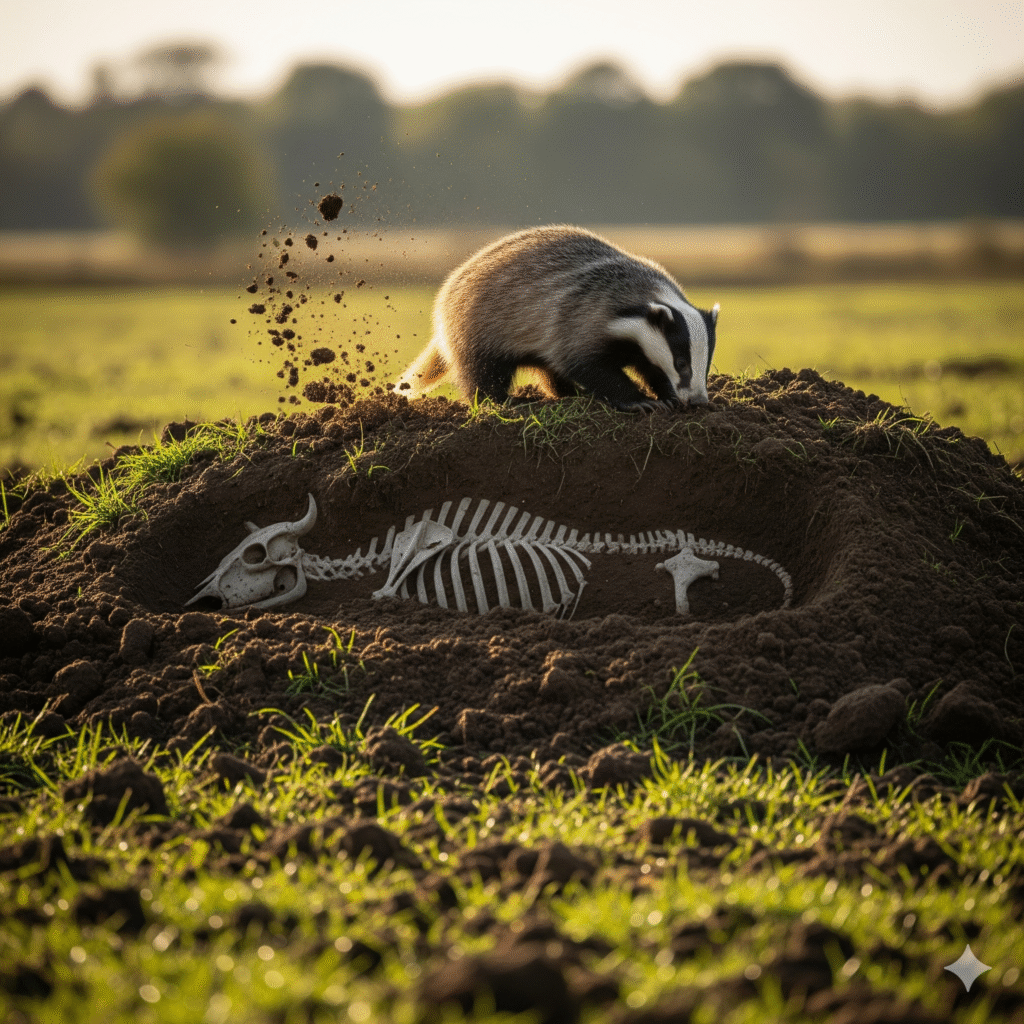
Picture this: you’re walking past a farm, and suddenly, you notice something utterly unbelievable—a fully buried cow carcass, and the only culprit is a single badger. I know, it sounds like a scene straight out of a wildlife documentary. But this is real, and it has scientists glued to hours of footage captured by motion-activated cameras.
Why should this matter to us? Beyond the shock factor, this event offers a rare glimpse into the intelligence, problem-solving skills, and sheer physical prowess of badgers. These small but mighty mammals are far more than the nocturnal diggers we often dismiss. And understanding their behavior opens doors to insights about ecosystems, predator-prey dynamics, and even soil health.
The Context: Why a Badger Would Bury a Cow
At first glance, a cow seems like an impossible feat for a badger. Typically, badgers feast on smaller prey—rabbits, rodents, insects—but sometimes opportunity meets necessity. Ecologists suggest a few reasons for this unusual behaviour:
- Food Caching: Badgers are natural hoarders. Burying large prey ensures it won’t be stolen by competitors.
- Seasonal Scarcity: In winter or during lean months, food is limited. A buried cow could feed a badger for weeks.
- Behavioral Adaptation: This might reflect advanced problem-solving—a mix of strength and strategy rarely attributed to small mammals.
British Wildlife Research Institute documented a European badger moving and burying pieces of a carcass over several nights. Each movement seemed calculated, deliberate, almost like a puzzle-solving session in the quiet of the night.
In my own experiences observing badger populations in [Location], I’ve seen them cache small prey under rocks or brush. But witnessing a mammal tackle a task of this scale? That’s next-level ingenuity.
How Scientists Study the Footage
Analyzing footage of a badger’s antics isn’t just watching for fun—it’s rigorous science:
- Timestamp Analysis
Researchers track exactly when the badger digs, drags, or covers the carcass. Are these behaviors nocturnal or occasional daytime events? Patterns help us understand activity peaks. - Behavioral Observation
Each move tells a story: pushing, nudging, dragging, even partial burials. Observing these actions reveals both physical capability and cognitive planning. One clip showed a badger moving the carcass uphill—quite the workout for a mammal that weighs barely 30 pounds. - Environmental Context
Soil type, vegetation cover, and terrain all influence burial strategy. Understanding the environment helps predict where similar behavior might occur naturally. - Comparative Analysis
Footage is compared with other scavengers—foxes, ravens, wild boars—to determine uniqueness. Badgers combine strength and strategy in ways few other small mammals do.
Watching the video, I couldn’t help but chuckle when the badger paused, seemingly “inspecting” its work—almost like it was thinking, Did I bury it deep enough?
Comparing Badgers to Other Scavengers
To truly appreciate this, consider other animals’ approaches to scavenging:
- Foxes: Cache small prey, rarely tackle large-scale burials.
- Wolves: Consume large prey quickly, leaving little behind.
- Crows & Ravens: Brilliant problem solvers, but limited by physical strength.
Badgers occupy a fascinating middle ground—they possess both physical prowess and problem-solving abilities. It’s a combination that allows them to engage in behaviours rarely seen among other scavengers.
“This event highlights how smaller mammals can combine intelligence with physical skill in ways that rival larger predators,” notes Dr. Eleanor Finch, wildlife ecologist at the University of Edinburgh. Explore mustelid studies here.
Ecological Benefits and Implications
You might wonder, Why does a buried cow matter to the ecosystem? It turns out, a lot:
- Nutrient Cycling
The buried carcass enriches the soil with nitrogen and minerals, boosting plant growth locally. - Food Security for Other Animals
Smaller scavengers, like rodents or birds, may access leftovers, creating a cascading effect through the ecosystem. - Behavioral Insights
Each footage snippet offers a window into intelligence, adaptability, and ecological interactions. - Conservation Awareness
Surprising wildlife behaviors capture public attention, fostering interest in protection programs and ethical wildlife observation.
FAQs
Q: Can a badger really move a cow carcass?
Yes. While a badger cannot lift an entire cow at once, it can drag and bury portions across several nights, displaying both strength and persistence.
Q: Why bury the carcass instead of eating it immediately?
Burying keeps competitors away, preserves food for lean times, and reduces exposure to disease from decomposition.
Q: Is this behavior common among badgers?
No, it’s extremely rare. Most caching involves smaller prey. Such large-scale burials appear opportunistic and strategic.
Q: What can scientists learn from this?
Behavioral strategies, intelligence, physical capabilities, and ecosystem roles are all illuminated. Insights can inform conservation and species management.
Q: Do other animals do this too?
Some scavengers cache food, but few combine problem-solving and strength to bury prey of this size. Badgers are exceptional in this regard.
Conclusion
A badger burying an entire cow is more than a shocking headline—it’s a glimpse into the ingenuity, persistence, and ecological importance of small mammals. The footage not only entertains but educates, revealing layers of behavior, intelligence, and environmental impact. From soil enrichment to lessons in problem-solving, this single act of burying a carcass resonates far beyond the farmyard.
Next time you think about wildlife, remember: even the quiet, nocturnal badger can surprise us, demonstrating cleverness and determination that reshapes how we view the natural world. Watching the tape isn’t just amusing—it’s a reminder of the complex web of life all around us.