
Introduction
Have you ever watched a dog tilt its head, sniffing the air like it’s solving the universe’s mysteries? That quirky behaviour isn’t just adorable – it’s a window into a canine superpower. Dogs’ incredible senses, loyalty, and intelligence are being harnessed in ways most of us never imagined: they’re doing real science.
From detecting early-stage cancers to helping protect endangered species, dogs are quietly transforming research across the globe. And if you’re a dog lover, the thought that your furry companion could one day make a difference in science is nothing short of awe-inspiring. In this article, we’ll explore the remarkable roles dogs play in research, share real-world examples, and guide you through why they’re more than pets – they’re scientific partners.
The Problem: Science Needs Super Senses
Scientific research isn’t always straightforward. Detecting subtle chemical changes in the human body, locating rare species, or monitoring complex ecosystems can be tricky, slow, and expensive. Humans are limited in both smell and observation, and even advanced technology can’t always replicate what a living, breathing dog can do.
Take disease detection, for example. Laboratory tests can take hours – or even days to confirm conditions like cancer or infections. Meanwhile, trained dogs can sometimes identify early signs in mere seconds. According to Science Daily, dogs’ sense of smell is estimated to be 10,000 to 100,000 times more sensitive than ours. That’s like giving your teen a telescope to watch the moon instead of squinting with their naked eyes – instant clarity.
I remember meeting a golden retriever named Max, trained to detect low blood sugar episodes in diabetic children. Watching him gently alert his young owner before a dangerous drop occurred was nothing short of miraculous. It was a moment that made me realize: dogs’ abilities are far more than tricks – they save lives.
How Dogs Contribute: Real-World Roles
1. Medical Detection Dogs
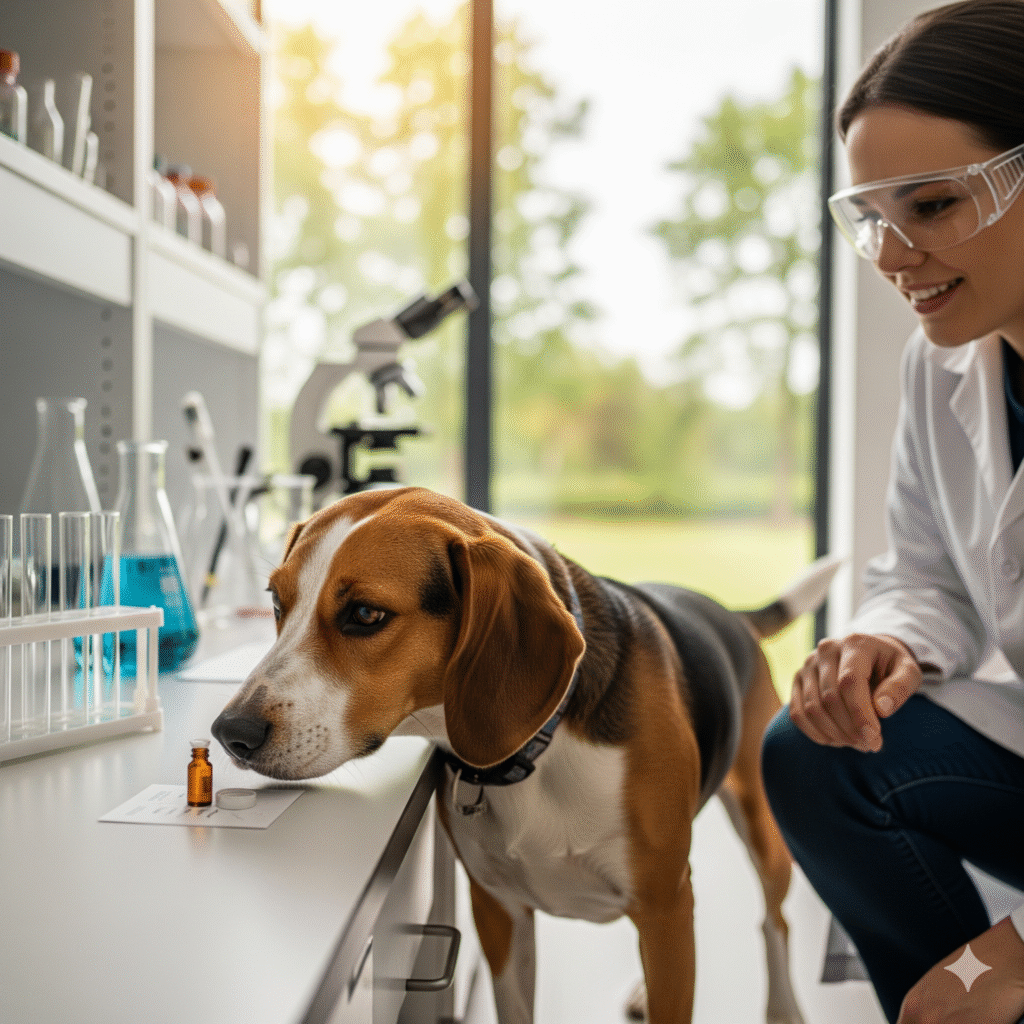
Dogs can sniff out diseases such as cancer, diabetes, and even COVID-19 with astounding accuracy. Their noses detect subtle chemical changes in samples that humans – and sometimes even machines – would overlook. Imagine a dog walking calmly through a lab, pinpointing a vial that signals early-stage illness – it’s science in action.
2. Conservation Canines
Dogs are invaluable in protecting wildlife. In Yellowstone and other national parks, scent-detection dogs locate scat, track elusive species, and even find rare plants. Their work allows scientists to collect crucial DNA data without disturbing the animals – a gentle, efficient approach that technology alone can’t replicate.
3. Behavioral and Cognitive Studies
Dogs are not just tools; they’re teachers. By observing canine behavior, scientists learn about cognition, social interactions, and communication. This knowledge feeds into broader research on human psychology, therapy programs, and even artificial intelligence.
4. Search-and-Rescue and Disaster Response
Dogs’ abilities to find people trapped in avalanches, earthquakes, or wilderness areas are unmatched. Their work informs safety protocols and emergency planning while demonstrating the power of instinct combined with training.
During a visit to a university lab, I watched a Labrador named Daisy alert researchers to early-stage ovarian cancer samples. The precision and focus she displayed was mesmerizing. That moment made me rethink everything I knew about the word “partner” – Daisy wasn’t just an animal; she was a vital contributor to science.
Comparison: Dogs vs. Technology
You might be wondering, “Why not just use machines?” While AI, drones, and sensors are impressive, dogs have unique qualities that technology can’t replace:
| Task | Dogs | Technology | Why Dogs Excel |
| Disease Detection | Sniff chemical changes in samples | Lab tests, AI sensors | Detects subtle cues quickly |
| Wildlife Monitoring | Track elusive animals and scat | Camera traps, drones | Adaptable to terrain and conditions |
| Search & Rescue | Track humans in varied environments | GPS, sonar | Instinctive problem-solving and adaptability |
Think of it this way: technology is like a high-powered telescope, but a dog is like an explorer with intuition and instinct. One gives data, the other interprets the world in real time.
Benefits and Use Cases
Medical Breakthroughs: Dogs can identify diseases early, giving patients a head start on treatment. For example, trained detection dogs have shown over 90% accuracy in detecting prostate cancer (BMJ).
Environmental Conservation: From spotting endangered species to tracking invasive plants, dogs help scientists gather critical information without disrupting fragile ecosystems.
Education and Therapy: Dogs in research programs teach empathy, observation, and responsibility. Therapy dogs in hospitals and labs reduce stress and improve overall well-being for students, patients, and staff.
Public Safety: Explosives and narcotics detection dogs not only save lives but also help researchers understand human-animal interactions and improve emergency protocols.
I’ll never forget a program I observed where dogs helped conservationists map wildlife populations in remote forests. Watching a Border Collie navigate rugged terrain with unwavering focus, locating animal scat for DNA analysis, was inspiring – it felt like witnessing nature and science harmonize.
Expert Insights
Dr. Claire Guest, a leading canine olfaction researcher at the University of Bristol, explains:
“Dogs’ ability to detect chemical compounds surpasses almost every other species. Their partnership with humans bridges biology and applied science, offering insights and capabilities that machines alone cannot achieve.”
Conservation experts echo this sentiment, emphasizing that scent-detection dogs are essential in preserving ecosystems efficiently and ethically.
FAQs
Q: How accurate are dogs in disease detection?
Trained dogs can identify conditions like cancer or infections with up to 95% accuracy, often spotting chemical cues invisible to humans and some machines.
Q: Can any breed participate in scientific research?
While many dogs are trainable, breeds like Labradors, Golden Retrievers, German Shepherds, and Belgian Malinois are preferred for their scenting ability, focus, and temperament.
Q: Are dogs useful in wildlife conservation?
Yes. They locate rare species, track invasive plants, and collect DNA samples with minimal habitat disruption.
Q: Do dogs outperform technology?
Dogs excel in flexibility, intuition, and adaptability – traits machines often can’t replicate – making them invaluable in research and fieldwork.
Q: How can families support scientific canine programs?
Volunteering, fostering, donations, and participating in educational outreach helps trained scientific dogs thrive and continue their life-saving work.
Conclusion
Dogs do their duty for science, and their contributions are nothing short of extraordinary. From sniffing out life-threatening diseases to safeguarding fragile ecosystems, dogs are proving themselves indispensable to research worldwide.
For dog lovers, scientists, and families alike, these four-legged collaborators embody curiosity, intelligence, and loyalty. They remind us that science isn’t only about machines and test tubes – it’s about relationships, intuition, and the bond between species. The next time your dog sniffs intently or tilts its head in curiosity, remember: it might just be doing science – one sniff at a time.