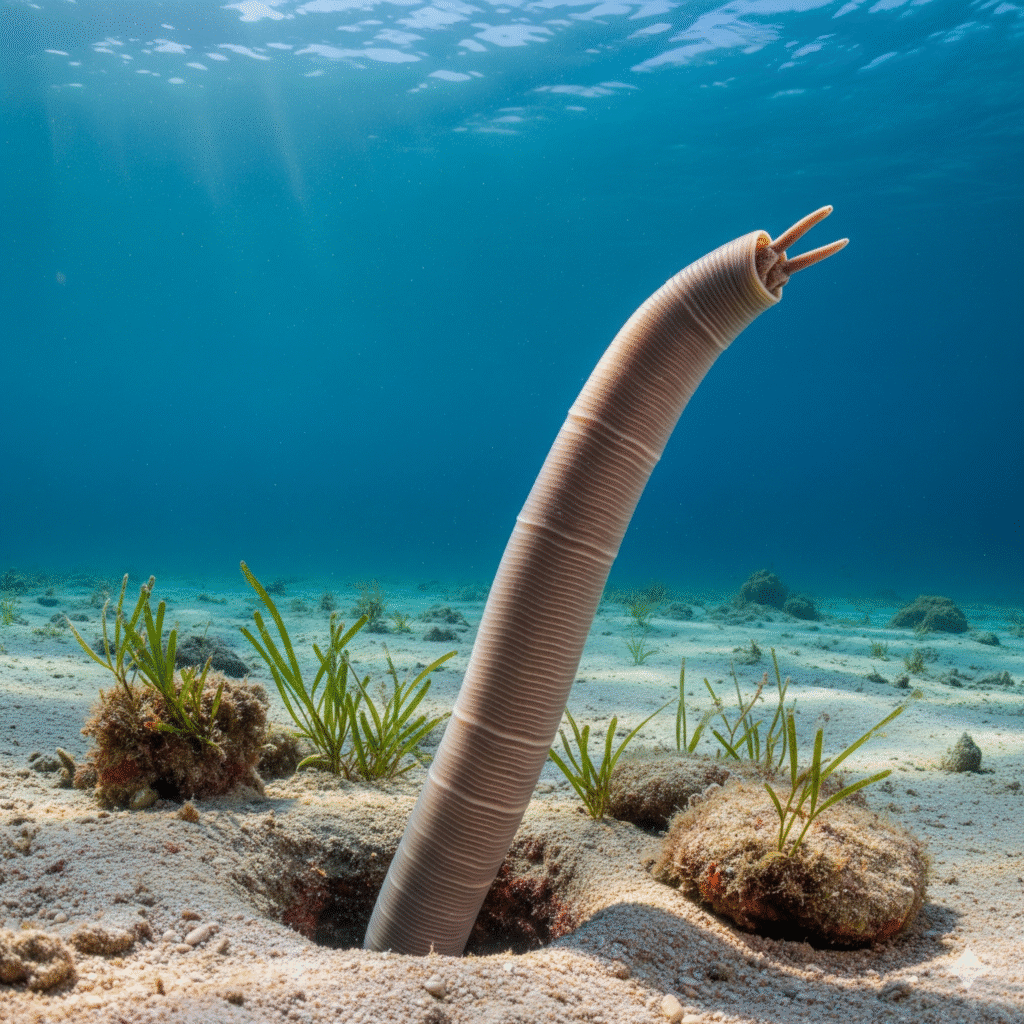

Have you ever stumbled upon something so strange, so utterly alien, that you couldn’t quite look away-even if you wanted to? That’s exactly what happens when you meet a giant shipworm. These enormous bivalves, lurking in their secret tubes beneath the ocean floor, can grow over three feet long. And while they spend most of their lives hidden, when they emerge-or are pulled from their watery homes-they’re equal parts fascinating and unsettling. For scientists, they’re a treasure trove of discovery. For the rest of us, well… maybe a bit of a nightmare.
Why should you care? Beyond the “creepy-cool” factor, these creatures challenge our understanding of biology, evolution, and marine ecosystems. They are proof that the ocean still holds mysteries capable of surprising even the most seasoned researchers.
The Problem: Why Giant Shipworms Are So Odd
Most people imagine worms as tiny, harmless creatures. Shipworms shatter that expectation. At first glance, they look like a grotesque worm, but biologically, they’re mollusks. What’s truly mind-bending is their size. Imagine a clam stretched to the length of a baseball bat, yet capable of burrowing silently into wood for decades.
Their unusual anatomy makes them difficult to study. Researchers often stumble across them only when they’re dredged up from shipwrecks or submerged piers. “The sheer size and secretive lifestyle of giant shipworms makes them one of the most enigmatic mollusks,” says Dr. Sylvia Earle, famed marine biologist and National Geographic Explorer-in-Residence. “Every specimen is like opening a window into a world we barely understand.”
Beyond their oddity, shipworms impact human infrastructure. Historically, they’ve eaten through the wooden hulls of ships, piers, and docks, causing costly damage. This dual nature-both marvel and menace-is what keeps scientists intrigued.
How Scientists Study Giant Shipworms
Studying a creature that spends most of its life hidden is no small feat. Researchers often rely on underwater cameras, submersibles, and DNA sampling to learn more. For instance, in the Philippines, scientists placed sensors near known shipworm habitats to monitor their activity without disturbing their fragile tubes, as reported in WIRED’s article on the giant shipworm, which details how these elusive creatures were studied in the wild.
Here’s a step-by-step glimpse into the research process:
- Locating the Tubes: Using sonar and diver observations, scientists map areas where shipworms are likely to reside.
- Careful Extraction: When a specimen is collected, researchers meticulously remove it with minimal damage. These creatures are surprisingly fragile despite their size.
- Laboratory Analysis: In labs, experts examine the shipworm’s anatomy, gut bacteria, and growth patterns. DNA sequencing has revealed symbiotic bacteria that digest cellulose, a rare adaptation in the animal kingdom.
- Behavioral Observation: Some labs recreate marine conditions to watch how shipworms feed and interact, offering insights into marine ecosystems.
It’s painstaking work, but each discovery adds layers to our understanding of marine life’s complexity.
Comparison: Giant Shipworms vs. Regular Worms
It’s tempting to lump shipworms with earthworms or garden-variety marine worms, but the differences are staggering:
| Feature | Earthworm | Typical Marine Worm | Giant Shipworm |
| Size | 4–10 inches | 1–3 feet | 3+ feet |
| Diet | Soil/organic matter | Detritus | Wood (cellulose) |
| Anatomy | Segmented body | Segmented or smooth | Mollusk with shells |
| Habitat | Soil | Sand/mud | Submerged wooden tubes |
The giant shipworm’s combination of size, diet, and hidden lifestyle is unmatched, making them one of nature’s most unusual survivors.
Benefits and Use Cases: Why They Matter
At first, shipworms may seem like oddities with little practical value-but they’re anything but. Their wood-digesting abilities provide lessons in bioengineering, sustainability, and marine ecology.
- Biotechnology Inspiration: Researchers study shipworm gut bacteria to develop new enzymes capable of breaking down cellulose, which could revolutionize biofuel production.
- Ecosystem Insights: Shipworms help recycle nutrients in marine environments, supporting fish populations and other marine life.
- Historical Knowledge: By studying shipworm damage on old wooden ships, historians can better understand ancient naval routes and ship construction techniques.
Even casually, witnessing a giant shipworm up close teaches lessons in adaptation, evolution, and resilience-reminding us that life finds a way in the strangest of niches.
Expert Insights
Dr. Mark Q. Martindale, a marine developmental biologist, notes:
“Giant shipworms blur the line between what we think of as worms and mollusks. Their evolutionary adaptations-especially their symbiotic bacteria-are not just fascinating; they’re a blueprint for understanding life in extreme environments.”
His work, along with studies published in Nature Communications, highlights that shipworms could hold keys to innovations we haven’t yet imagined, from sustainable materials to novel enzymes.
FAQs
Q1: How big can a giant shipworm get?
A1: Giant shipworms can exceed three feet in length. While most remain hidden in wooden tubes, when revealed, they dwarf most other bivalves and give scientists plenty to study.
Q2: Are giant shipworms dangerous to humans?
A2: Not directly. They don’t bite or sting, but their sheer size and movement outside of their tube can be startling. The real danger historically has been to wooden structures.
Q3: Where are giant shipworms found?
A3: They thrive in warm, tropical waters, often in Southeast Asia, the Philippines, and parts of the Pacific Ocean. They burrow into submerged wood like piers, sunken logs, and shipwrecks.
Q4: Why do scientists care about shipworms?
A4: Their unique biology, especially their wood-digesting symbiotic bacteria, provides insights into evolution, marine ecosystems, and potential biotechnological applications, such as biofuel production.
Q5: How do shipworms eat wood?
A5: They use special bacteria in their guts to break down cellulose, turning what seems like indigestible material into nourishment—a remarkable evolutionary trick.
Conclusion
The giant shipworm is more than just a creepy curiosity-it’s a living testament to evolution’s ingenuity. From burrowing silently in submerged wood for decades to hosting bacteria that can digest cellulose, this mollusk challenges what we know about marine life. For scientists, each discovery offers potential breakthroughs in biology, ecology, and technology. For the rest of us, it’s a chance to marvel at the ocean’s hidden wonders-reminding us that sometimes, the most extraordinary life forms are the ones we barely notice.
Next time you’re near the ocean or exploring a sunken pier, remember: lurking beneath the wood could be a creature that redefines everything you thought you knew about worms, mollusks, and the astonishing inventiveness of life itself.