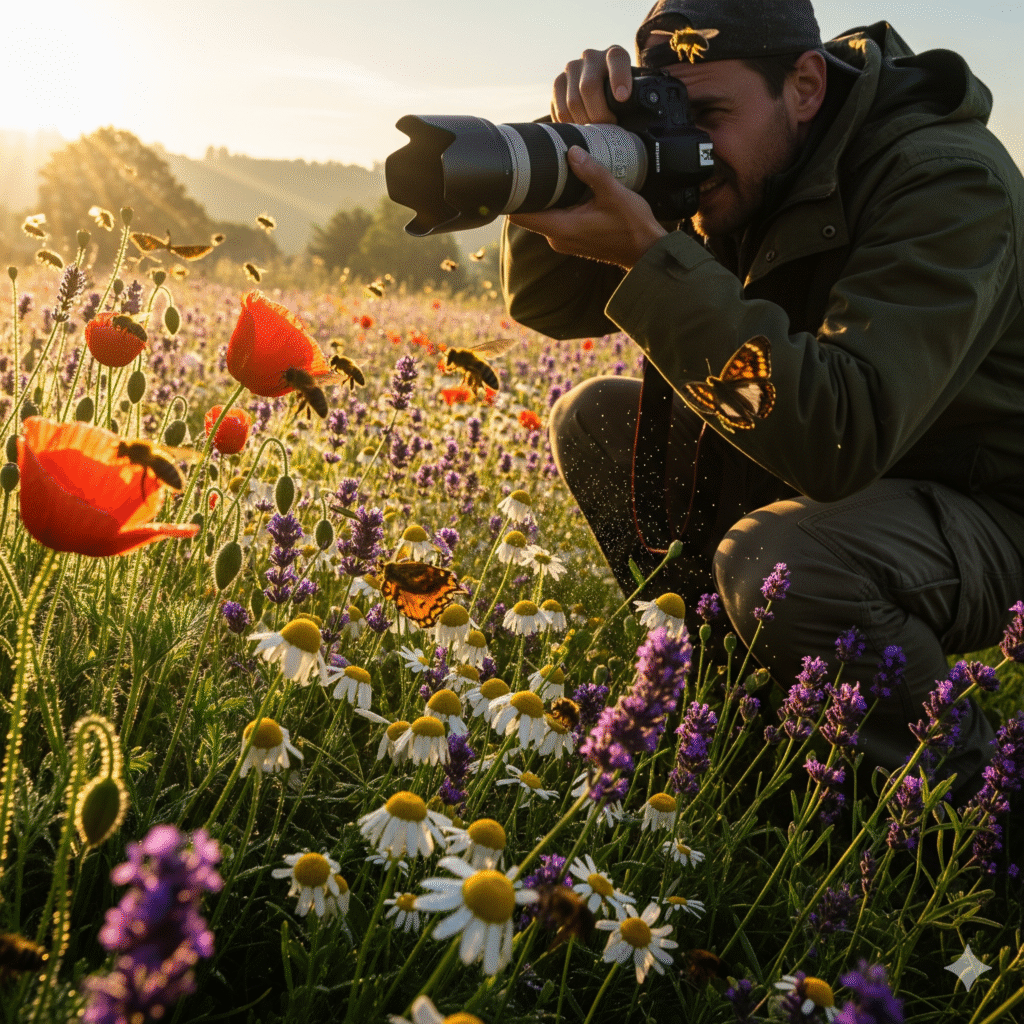

Imagine this: the morning sun spills over a meadow, golden light dappling the flowers, and you’re crouched among the blooms, camera in hand, waiting for the tiniest actors in nature’s grand play-the pollinators-to appear. Bees, butterflies, hummingbirds, even tiny beetles, all moving with a purpose that sustains life on Earth. Capturing these moments isn’t just a hobby-it’s a way to witness and preserve the delicate interactions that often go unnoticed.
Pollinators are the unsung heroes of our ecosystem. According to the Food and Agriculture Organization, over 75% of global food crops rely on animal pollination. Without them, the fruits, vegetables, and flowers we take for granted would struggle to survive. By photographing pollinators in action, we document not just beauty but an essential process that affects our daily lives.
Whether you’re a photographer, a scientist, or simply a nature lover, learning to “watch their dust”-the pollen that clings to every movement-is a rewarding journey. It demands patience, attention, and a willingness to slow down and observe the world at its smallest scale.
Why Pollinators Are Hard to Capture
Photographing pollinators is a delicate challenge. These creatures are small, fast, and unpredictable. A single bee may linger only a few seconds on a flower, while a butterfly flutters out of frame in an instant. Add in environmental factors like wind, sunlight, and background distractions, and you quickly realize why capturing the perfect shot is as much an art as a science.
Many photographers overlook the subtle beauty of pollen itself. Those tiny grains clinging to legs, wings, and bodies create a story of ecological connectivity. Focusing on them reveals patterns invisible to the casual observer: the geometry of pollen placement, the dance between flower and pollinator, and even interspecies interactions.
Patience is essential. I once spent three hours photographing a single patch of wildflowers before a bee landed in the perfect spot, sunlight highlighting golden dust on its legs. Moments like these remind you why slowing down in nature can be so transformative.
How to Photograph Pollinators Effectively
- Choose the Right Gear
Macro lenses are invaluable for capturing detail, while a fast shutter speed freezes motion. A tripod stabilizes your frame, and a lens hood can reduce glare. Personally, I’ve found a 100mm macro lens on a mirrorless camera strikes the perfect balance of portability and quality. - Understand Pollinator Behavior
Bees follow patterns; butterflies prefer sunny spots. Observing their routines before shooting increases your chances of capturing meaningful interactions. Timing matters: early mornings often bring slower movement, softer light, and dew-laden flowers. - Focus on the Pollen
The “dust” is the story. Use a shallow depth of field to isolate pollinators and their pollen, making the viewer feel as if they’re peering into a miniature universe. Experiment with angles—shooting from below a flower can highlight a bee’s legs dusted with pollen against the sky. - Be Ethical
Avoid disturbing habitats. Minimize handling flowers or pollinators, and maintain a safe distance. Remember, your subject is contributing to vital ecological processes—your role is observer, not interloper.
Comparing Techniques and Alternatives
Some photographers prefer high-speed photography to capture rapid wing movement, while others focus on macro close-ups that reveal pollen grains. Drones are also emerging as tools for larger-scale pollination studies, offering aerial views of pollinator activity in agricultural fields.
But nothing replaces patience and immersion in the natural environment. A handheld camera, a notebook of observations, and time in the field often yield more meaningful photographs than any high-tech gadget. It’s a reminder that technology enhances but cannot replace human curiosity and attention to detail.
Benefits and Real-World Use Cases
Photographing pollinators is more than a creative pursuit.
- Scientific Documentation: High-quality images help researchers track species populations, study behaviors, and monitor ecosystem health. For example, citizen science projects like iNaturalist rely heavily on photographic records.
- Education and Awareness: Photos make abstract concepts like pollination tangible for students and the public. Visual storytelling fosters environmental stewardship.
- Conservation Efforts: Documenting rare or declining pollinator species can inform policy and preservation strategies. Images have been used in campaigns advocating for bee-friendly habitats and pesticide regulation.
- Artistic Expression: Beyond science, pollinator photography allows for exploration of composition, color, and light, creating images that captivate and inspire.
Expert Insights
Dr. Samantha Porter, an ecologist with the Pollinator Partnership, notes:
“Photographs of pollinators aren’t just pretty pictures-they’re data. Each image provides insight into species behaviour, flower preferences, and ecosystem health. Citizen scientists and photographers play a vital role in expanding our understanding of these crucial animals.”
FAQs
Q1: What is the best time of day to photograph pollinators?
A1: Early morning is ideal. Pollinators move more slowly in cooler temperatures, and the light is softer, producing fewer harsh shadows. Late afternoon can also work for warm, glowing light.
Q2: Can I photograph pollinators without disturbing them?
A2: Absolutely. Use a telephoto or macro lens and maintain distance. Move slowly and avoid sudden movements to minimize disruption.
Q3: Are all pollinators equally easy to photograph?
A3: No. Bees and butterflies are more predictable, while flies and beetles may be sporadic. Observing behavior patterns helps increase success.
Q4: How important is pollen in these photos?
A4: Very. Pollen tells the story of ecological interaction and makes images scientifically valuable. Capturing it adds depth and meaning beyond aesthetics.
Q5: Can pollinator photography contribute to conservation?
A5: Yes. Photos document species presence, population trends, and habitat use, which are critical for conservation planning. Citizen science platforms often use submitted photos for research.
Q6: What equipment is essential for beginners?
A6: Start with a DSLR or mirrorless camera and a macro lens. A tripod stabilizes shots, while patience and observation are your most important tools.
Conclusion
Photographing pollinators is a unique blend of art, science, and mindfulness. It teaches patience, observation, and appreciation for the intricate processes that sustain life. Whether your goal is stunning visuals, contributing to research, or simply connecting with nature, capturing these tiny yet vital players offers endless rewards.
Next time you see a bee dusted in golden pollen or a butterfly balancing delicately on a flower, remember: there’s a story waiting to be told, and your camera can help preserve it for the world. Step outside, slow down, and watch their dust-it’s a journey worth taking.