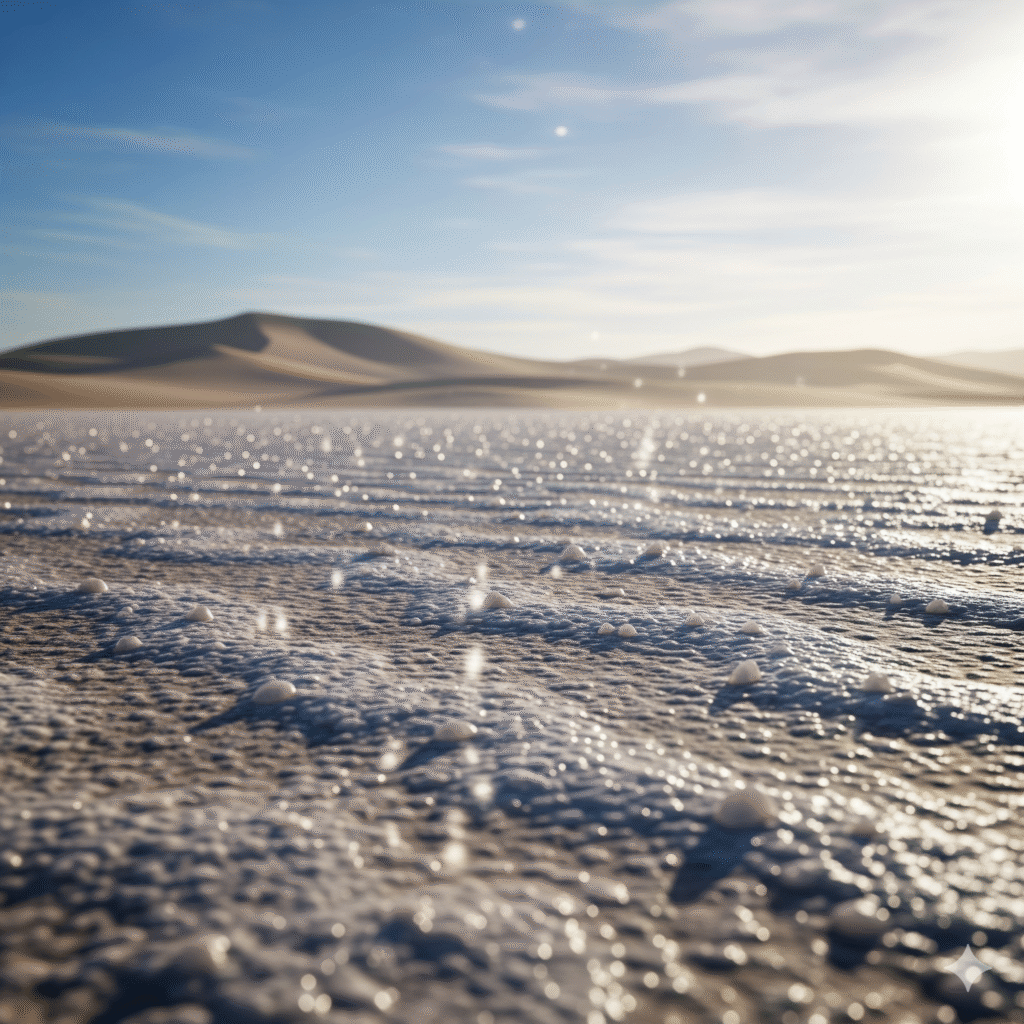

Imagine standing in the vast, white expanse of a desert, sunlight bouncing off glittering sand dunes, and noticing tiny, gravel-size crystals slowly sliding across the ground. It almost feels like magic—but scientists have been trying to crack this mystery for decades. The movement of gypsum crystals isn’t just a desert curiosity; it’s a window into the physics of nature, climate, and even planetary science.
Whether you’re a curious traveler, a budding geologist, or a photographer chasing unique natural phenomena, understanding how these crystals move is both fascinating and surprisingly accessible. In this article, we’ll explore the forces behind their movement, compare them with other moving rocks, and highlight the real-world implications for science and adventure alike.
Why Scientists Are Fascinated by Gypsum Crystals
Desert Mysteries Uncovered
It’s not every day that rocks move on their own—or so it seems. For years, visitors to deserts like White Sands in New Mexico have noticed linear trails across the sand, wondering if some unseen hand was at work. Geologists and physicists have been captivated by these trails because they challenge our expectations of how solid objects behave in natural environments.
From Lab to Sand Dunes
In controlled experiments, scientists have recreated crystal movements using miniature ice sheets, gentle air currents, and water. These lab simulations confirm that even light forces can mobilize these dense crystals. Observing the phenomenon in the field gives researchers a rare, tangible glimpse into the subtle interplay of weather, geology, and friction.
“It’s remarkable how a seemingly static desert landscape can be so dynamic. These crystals tell a story of physics in motion,” says Dr. Emily Fisher, a geophysicist at the University of New Mexico. Source.
How Gypsum Crystals Move: Step by Step
Ice, Wind, and Water: The Driving Forces
The key to these moving crystals is thin sheets of ice forming on the desert floor during cold nights. As temperatures rise, ice begins to melt, reducing friction between the crystal and sand. Even a gentle wind—sometimes as light as 2 miles per hour—can then push the crystal along, leaving long, meandering trails behind.
Tracking Crystal Paths
Using time-lapse photography and GPS tracking, scientists have captured mesmerizing footage of these crystal movements. Some travel mere inches per day, while others cover several feet in a single morning. Each track is unique, reflecting subtle variations in wind, slope, and moisture—a natural signature of the forces at play.
Comparing Gypsum Crystals to Other Moving Rocks
The Sailing Stones of Racetrack Playa
You might have heard of the “sailing stones” in California’s Death Valley. These larger rocks leave long trails in dried lakebeds, moving in a manner similar to gypsum crystals—but on a larger scale. While both phenomena involve low friction and environmental triggers, gypsum crystals respond primarily to ice and dew, whereas sailing stones rely on thin ice sheets and occasional flooding.
Key Differences and Similarities
- Size: Gypsum crystals are smaller and more delicate.
- Speed: Crystals move slowly, often imperceptibly without time-lapse photography.
- Environmental triggers: Both rely on natural, subtle forces rather than mechanical intervention.
This comparison illustrates how even small variations in environment can dramatically affect movement—a lesson that extends to broader geophysical studies.
Benefits of Understanding Gypsum Crystal Movements
Climate and Environmental Insights
Studying these movements offers more than just curiosity value. By analyzing when and how crystals move, scientists gain insight into microclimates, humidity levels, and wind patterns. This knowledge helps model desert ecosystems and can even inform research on climate change impacts in arid regions.
Inspiring Science and Photography
For photographers, capturing these moving crystals is a dream. The tracks tell stories of invisible forces at work and offer a rare chance to photograph physics in action. For educators, they’re a tangible example of how simple elements—ice, wind, water—interact to create surprisingly complex phenomena.
Visiting White Sands National Park
Where to Witness Moving Crystals
White Sands National Park in New Mexico is the premier location for observing gypsum crystal movements. Look for areas with smaller dunes and flat plains, especially in the early morning when dew and thin ice sheets are most likely to form.
Best Times for Observation
The ideal season is late winter to early spring, when temperatures drop enough at night for ice to form but mornings remain calm for wind-assisted movements. Always check local park regulations and respect natural features.
Expert Insight
Dr. Michael O’Reilly, a geomorphologist specializing in desert dynamics, notes:
“These crystals are tiny storytellers. Each movement encodes environmental data that can help us understand wind patterns, ice formation, and even broader ecological shifts. They’re more than curiosities—they’re nature’s logbooks.”
Fieldwork combines direct observation, lab simulations, and photographic documentation, showing that even the smallest elements in deserts can reveal large-scale environmental patterns.
FAQs
Q1: How fast do gypsum crystals move?
A: Most move just a few inches per day. With time-lapse photography, however, the movement becomes dramatic, revealing intricate tracks and patterns.
Q2: Can I see them move with the naked eye?
A: Rarely. Movements are usually subtle. Observing tracks forming over hours or days is the most practical way to appreciate their motion.
Q3: Why don’t all crystals move?
A: Movement depends on environmental conditions like ice formation, wind, slope, and moisture. Some crystals remain stationary due to microtopography or friction variations.
Q4: Are moving gypsum crystals unique to White Sands?
A: While White Sands is famous for them, similar phenomena occur in other deserts, such as the Racetrack Playa in California, but the mechanisms can differ slightly.
Q5: Do moving crystals affect the ecosystem?
A: Indirectly, yes. Their movement affects sand distribution and can create microhabitats, influencing desert flora and fauna patterns.
Conclusion
Watching gravel-size gypsum crystals glide across desert sands is more than a natural curiosity—it’s a lesson in patience, physics, and the hidden dynamics of our environment. From subtle ice sheets to gentle morning winds, these tiny stones narrate a story of nature’s precision.
Next time you’re exploring White Sands or another desert, look closely at the tracks. Each one is a reminder that even in seemingly barren landscapes, there’s motion, mystery, and science waiting to be uncovered. Whether you’re photographing, studying, or simply marveling, these crystals offer a rare glimpse of nature’s quiet choreography.
Curiosity piqued? Pack your camera, check the forecast, and see for yourself how tiny forces make these crystals dance across the desert floor.